The pay per lead model paid for Dan Wardrope’s house and wine cellar in about two years. It started in 2016, when one client asked to buy leads one by one instead of on a retainer.
Here’s the problem you probably have. You want to get paid on results, but ads, funnels and rising lead costs put all the risk on you.
By the end of this post, you’ll know how the model works and what to charge per lead. You’ll also see how we now get paid on performance with zero ad spend.
What will you learn in 30 seconds?
You’ll learn how to get paid on results without buying ads. Here are the five points that matter.
- You charge for results, not for your time.
- You price each lead at about 1% of the client’s average order value.
- The old way works, but you carry the ad spend risk.
- The new way wakes up old leads with one text and AI.
- You take up to 50% of the profit, with no ads and no funnels.
What is the pay per lead model?
The pay per lead model means a client pays you for each lead you deliver, not for your time. You agree a price per lead, generate the leads for less and keep the difference. There is no monthly retainer and no long contract.
Most agencies still charge a retainer. A client might pay $5,000 a month for Facebook or Google ads, whether or not the ads work. It sounds safe.
In practice, clients pay late, text you at 10pm and fire you when results dip. Dan had five clients, and it felt like having five bosses.
How does the money work in a real deal?
You earn the gap between your lead price and your lead cost. Here’s a real deal from our agency days.
- We agreed to send one client 100 leads a week at $100 each.
- We generated those leads on Meta for about $25 each.
- That left roughly $7,500 a week in gross profit from one client.
Clients love it because it’s simple. If they like the leads, they buy again next week. If they don’t, they stop.
We compare both models in Retainer Contracts vs Pay Per Lead.
How do you run the pay per lead model in 4 steps?
The classic pay per lead model has four steps. You pick a niche, land clients, build a funnel and set your price. Thousands of people in our Flexxable community still run it this way. Here is each step in order.
Step 1: Which niche should you pick?
Pick a niche with lots of buyers, not one whale. Think mortgage brokers, insurance agents, roofers, solar firms and home improvement companies. They can’t switch industry next month, so they need a steady flow of leads. To narrow it down, read How To Find A Niche Within A Niche. Our guide to what a micro niche is covers the basics.Step 2: How do you land clients with no case study?
You don’t need a case study. Use what we call the grandfather deal. It’s the deal before the deal.- Make the offer. Say you’re entering their industry and want two or three partners.
- Build everything. You create the ads, the funnels and the landing pages.
- Let them fund the ads. The client covers the ad spend, so you carry no ad risk.
- Get paid on sales. You usually earn 10% to 25% of each sale they close.
Step 3: What funnel should you build?
Send the ad to a quiz or an advertorial first, then to a landing page. Ads that go straight to a landing page usually bring cheap leads, but the quality suffers. A clear customer avatar helps you write that quiz for the right person.Step 4: What price do you set?
Price is the step everyone asks about. It gets its own section next.How much should you charge per lead?
Charge about 1% of the client’s average order value for each lead. If a mortgage broker makes $5,000 on an average sale, your lead price is about $50. It’s a rule of thumb, but it works itself out almost every time.
Average order value is what the client makes per closed sale, on average. One deal might pay $10,000 and the next $1,000. Ask for the average, then follow three steps.
- Get the number. Ask the client for their average order value. Example: $5,000.
- Take 1%. That gives you a lead price of about $50.
- Check your margin. Make sure you can generate the lead for far less.
Selling AI services instead of leads? Read How To Price Your AI Automation Service. Our guide on how to charge clients for AI services covers the pricing models.
Why do old leads beat new leads?
Old leads have already raised their hand, and the client has already paid for them. Our clients converted about 5 in every 100 leads. The other 95 sat in a database gathering dust.
Ask ten businesses what they do with old leads, and nine will say “nothing”. So we stopped generating new leads and started waking up the old ones.
The name for this is database reactivation. It means contacting a company’s old leads again and turning them into sales.
Look at what disappears. There’s no ad spend, no funnel and no argument about lead quality. Dan says it’s a hundred times easier than the old way.
How does the Prince Charming SMS work?
The Prince Charming SMS is a two-line text that asks an old lead one simple question. When they reply, AI takes over the chat and books the appointment.
The name is tongue in cheek. It wakes leads up, like Sleeping Beauty.
Here’s an example:
“Hey, it’s Sarah from [Company Name]. Is this the same [Name] who was interested in getting solar panels a couple of weeks ago?”
The process has four steps.
- Send the text. It lands in their messages, not their inbox, so people reply.
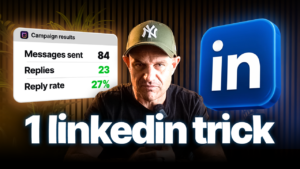
- Watch the reply rate. From a good list, under 20% replying means something has gone wrong.
- Let the AI chat. It asks qualifying questions and handles objections like a real person.
- Book the call. The AI books the lead straight into the client’s calendar.
What results have we seen?
Our best campaigns came from leads that sales teams had written off. Here are two from the video.
- Debt consolidation. We took 319 leads that a sales team had dialled 10 times each. 23% booked a call.
- Training certificates. A client sold $97 training certificates. We messaged people 15 minutes after they abandoned their cart. That campaign made $680,000, and the client wired us $172,000 in commissions.
Abandoned carts are a huge pool. Baymard Institute puts the average cart abandonment rate at about 70%. We show the e-commerce build in How to Fix Shopify Abandoned Checkout With AI.
Results not typical. They reflect individual effort and market conditions. See our earnings disclaimer.
What tools sit behind it?
You need a CRM, an automation tool and an AI model. The video skips the tech, so here is the stack we teach.
- HighLevel (Go High Level) is a CRM that sends the texts and holds the client’s calendar. Start with our guide to Go High Level workflows.
- n8n is a workflow automation tool that passes data between apps. See how to connect GoHighLevel to n8n with webhooks.
- Zapier is a no-code tool that links apps with simple triggers and actions.
- AI models, such as OpenAI’s GPT models, read each reply and write the next message.
How do you pitch this to a business?
Ask one question: do you have old leads we can turn into sales with AI and SMS? Then explain that you work on performance. We call it the offer of the century, because clients rarely say no.
Here’s the pitch, word for word:
“Do you have any old leads we can turn into sales or appointments using AI and SMS or WhatsApp? We do it on a performance basis, which means if you don’t get paid, we don’t get paid.”
Then follow five steps.
- Start a barbecue conversation. Get them curious. Don’t talk percentages in your first message.
- Book a coffee date. That’s a Zoom call, not a sales call.
- Show a live demo. Let them watch the AI text a lead and book it into a calendar.
- Handle the 50% objection. Ask: “Would you rather have 100% of nothing or 50% of an extra hundred grand?”
- Start with a 30-day test. You only work with sales teams that can close. Now you’re the chooser, not the chosen.
The full script lives in The Offer of the Century. You can also watch a real sales call demo.
How do you get paid without waiting months?
You can take up to 50% of the profit on every sale. When that profit takes months to land, you get paid at an earlier milestone. We call these milestones anchor points.
Every sales process has stages, and a lead gets more valuable at each one. Agree with the client which stage triggers your fee.- Debt consolidation. The sale can close in a couple of days, so you take your share at the sale.
- Mortgages. Commission can take three or four months, so you charge per appointment booked.
- Solar. You charge when the quote goes out.
Which niches work best, and how do you vet a client?
Almost any business with salespeople chasing paid leads can work. That covers solar, roofing, mortgages, insurance, car finance, claims, dental, cosmetic surgery, home improvements and car dealerships. It also works in e-commerce, where you message abandoned carts and past buyers.
Run every prospect through this checklist.- High ticket. They sell something worth over $1,000 with a decent margin. E-commerce needs high volume instead.
- Active ads. They already advertise, so fresh leads keep coming in.
- Big enough list. They hold at least 1,000 contacts in their database.
- A team that can close. In mortgages, roughly 5% of leads becoming customers is normal.
- Good vibe. They’re hungry to make it work, and they see your value.
How do you start as a beginner?
You need a laptop, a pre-built AI demo and the guts to contact business owners. The old way needs media buying skills, funnel builds and money to burn while you learn. This version needs none of that.
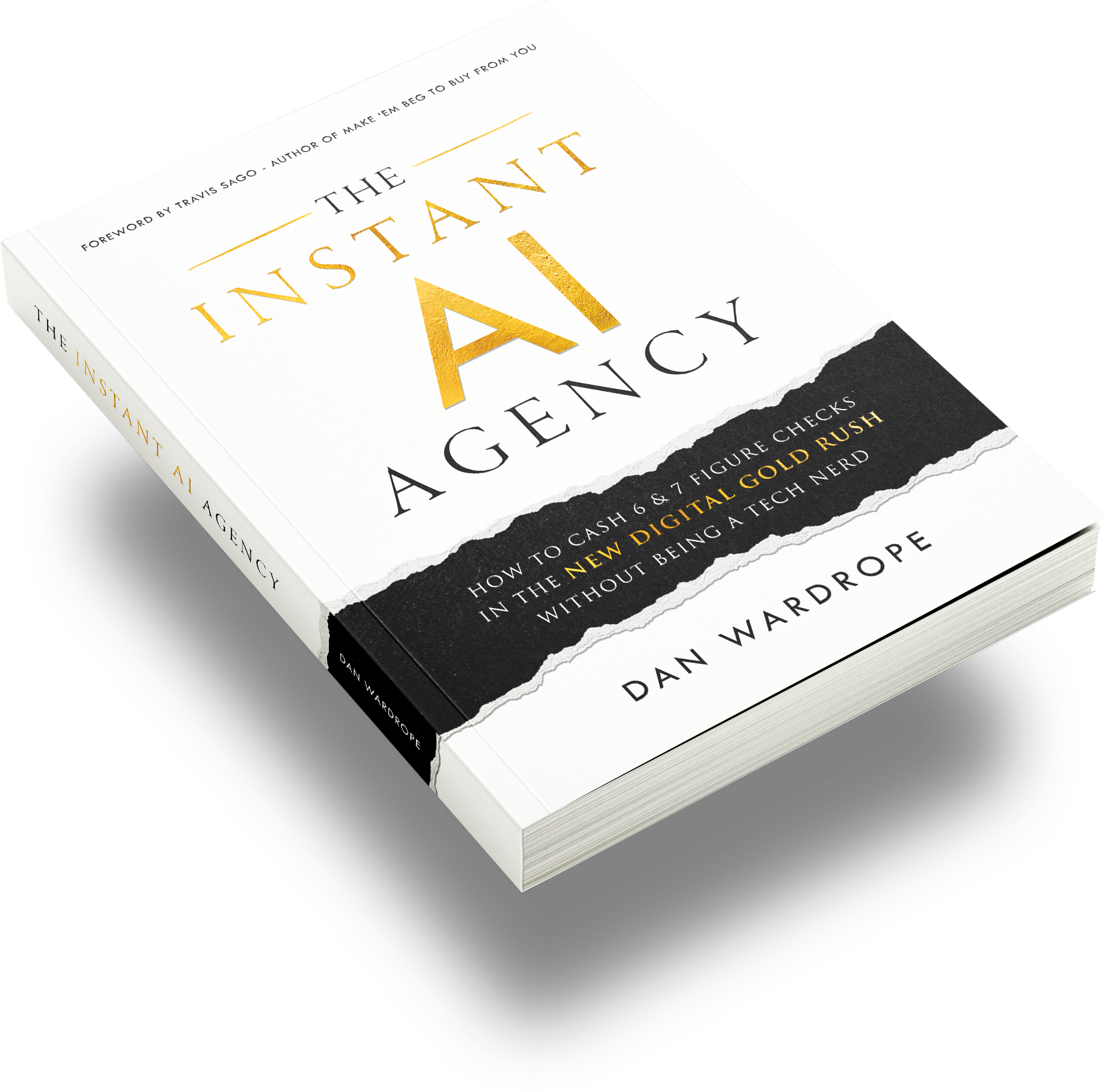
Start with your phone. Scroll through your contacts and put the offer in front of every business owner you know. You’ll be surprised how many there are. For the demo, Sales Wingman Lite shows a prospect an AI agent built from their own website. Rob, one of our students, worked in a call centre when he bought Dan’s book, The Instant AI Agency. He ran demo after demo before he built anything. Eighteen months later, he sold 20% of his business for £1.4 million in cash. Results like Rob’s are not typical. One win leads to more work. After dead leads come fresh leads, Google reviews and voice AI. You stop being an expense and become a partner. We list the next services in What to Offer Clients When the Leads Run Out. Ready to build it? Watch The Prince Charming Challenge, or read the day one walkthrough.Frequently asked questions
Is the pay per lead model still worth it in 2026?
Yes. The pay per lead model still works, and thousands of people in our community run it.
The catch is risk, because you pay for the ads before the client pays you. Reactivating old leads keeps the performance pay and drops the ad spend.
Pay per lead vs retainer: which suits a new agency?
Pay per lead suits you if you want pay tied to results. A retainer pays for your time, whether or not the ads work.
If you already hold retainers, switch slowly. We explain how in The Low Risk Method To Transition From Retainers.
How should an AI automation agency charge clients?
Charge on performance. Take up to 50% of the profit, or a fixed fee at an agreed anchor point. A booked appointment is a common one.
Start with a 30-day test, so both sides see real numbers first. Our pricing framework walks through each model.
What is database reactivation?
Database reactivation means contacting a company’s old leads again to turn them into sales. Nine in ten businesses do nothing with those leads.
One text plus AI can change that. In one campaign, 23% of 319 dead leads booked a call. See how to use AI and SMS to revive old leads.
Do you need A2P verification to send these texts?
In the US, yes. Carriers expect businesses to register for A2P 10DLC before they text from local numbers. In the UK and EU, HighLevel asks for a regulatory bundle instead. The video doesn’t cover this, so use our guides:
- The Ultimate Guide to A2P Verification With Go HighLevel
- How to Get Your UK or EU Phone Number Verified in HighLevel
- The Do’s and Don’ts of SMS Marketing
Consent rules differ by country, so check them before you send.
What happens if Facebook bans your ad account?
With classic pay per lead, a Facebook ad ban stops your lead flow overnight. You still owe the client leads, and you have no way to generate them.
Here’s what to do when Facebook bans your ad account. Reactivation avoids the problem, because you never run an ad.
How do Go High Level workflows and n8n webhooks fit in?
A Go High Level workflow sends the first text and any follow ups. A webhook is a message one app sends another when something happens.
When a lead replies, the webhook passes that reply to n8n, where the AI writes an answer. We build one in this n8n and GoHighLevel guide.
Which micro niche should you choose for old leads?
Choose a micro niche that passes the checklist above. A micro niche is a narrow slice of a bigger market. One example is income protection for the over 60s, inside insurance. Narrow niches make your demo, your pitch and your results easier to repeat.
Conclusion
The pay per lead model still works, and it changed Dan’s life. You just don’t need to carry the ad risk any more. Here’s what to take away.
- Charge for results. Clients understand it, and nobody needs a contract.
- Use the 1% rule. Price each lead at about 1% of average order value.
- Wake up old leads. One text and AI can turn a dead database into booked calls.
- Pitch on performance. Open with curiosity, show a demo and start with a 30-day test.
- Get paid at anchor points. Pick the milestone that suits the client’s sales cycle.
Your next step is simple. Open your phone today, find one business owner and ask about their old leads.